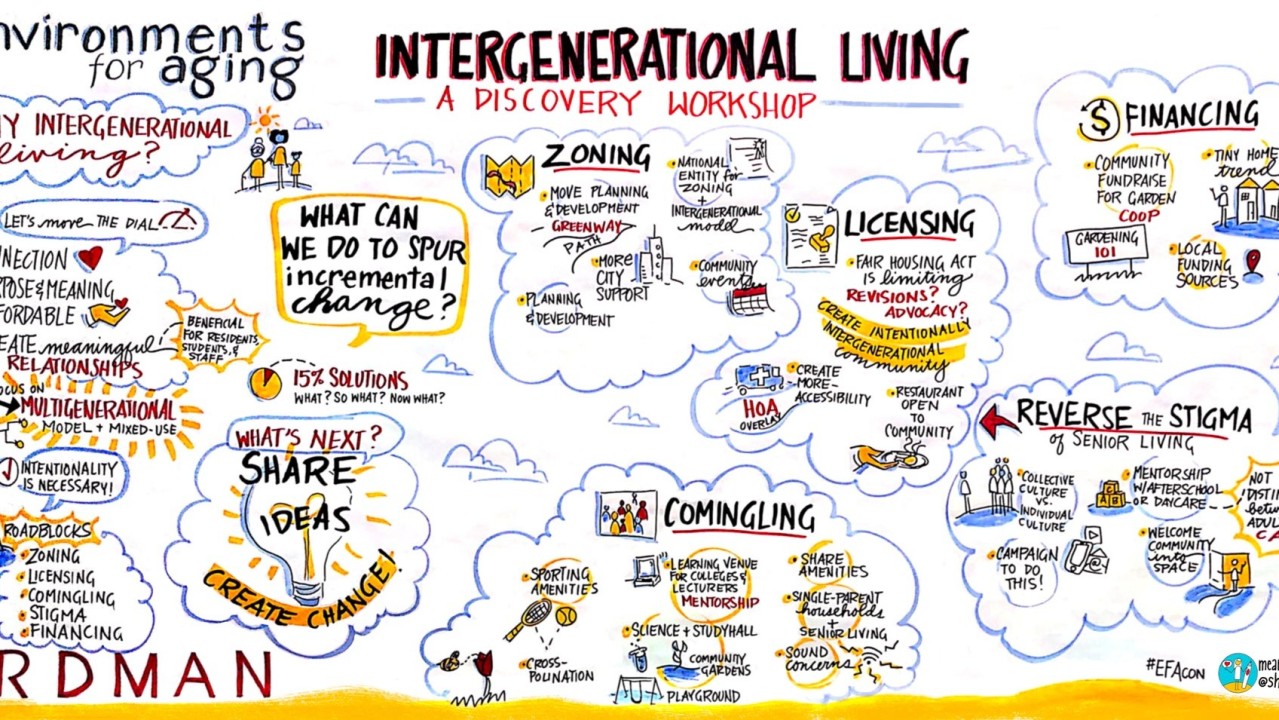

Intergenerational living is a concept that involves mixing various age groups in the same community or house. It provides a setup that fosters interaction, mutual support, and understanding among different ages of residents, which includes children through young adults to older adults. The consciously designed spaces allow for relationships to blossom and ensure that all parties involved will benefit from improved well-being. As the population ages and social isolation becomes a bigger concern, intergenerational living is a plausible solution to some of the pressing issues in society today like housing affordability, loneliness, and community support.
What Is Intergenerational Living?
Intergenerational living can take many forms, from intentional intergenerational communities to multigenerational households and intergenerational cohousing. Intentional intergenerational living is when there are residential communities open to all ages, with purposeful efforts made to promote intergenerational connection and relationships. This can be through common spaces, shared activities, and programs specially meant to help residents connect. Cohousing models, for example, combine private homes with shared amenities in such a way that residents can retain their privacy while still living in a community.
The Advantages of Intergenerational Living
Minimizing Social Isolation
Inter-generational living may provide one of the most critical potential benefits: it can alleviate social isolation, particularly for older populations. The US Surgeon General described loneliness as an epidemic, with about a quarter of older adults considered socially isolated. Intergenerational living layouts offer opportunities for the elderly to engage with younger populations, creating bonds that can ameliorate the effects of loneliness. Research shows that older residents of intergenerational settings often have better health and more social options for them than those in traditional environments.
Enhance the Support of the Community
Intergenerational living fosters an environment that is advantageous for all because the residents can support each other in care and social needs. For example, at Bridge Meadows and Treehouse Foundation, elders are role models and caretakers for children, while families get the wisdom and knowledge of the experience of their older neighbors. This is a mutual support system that improves the quality of life of all residents and develops a sense of belonging and community.
Affordable Housing
High rents are a challenge to many families and individuals, especially those with low to moderate incomes. Intergenerational living is an affordable housing solution that accommodates different income levels. By sharing resources and living areas, the residents can significantly reduce their housing costs. For example, the One Flushing model in New York City offers mixed-income apartments that include senior housing units, hence providing affordability and inclusiveness.
Mutual Learning and Empathy
Living in an intergenerational setting allows for sharing knowledge and life experiences, which promotes empathy and understanding across age groups. Older adults can share their wisdom and experience; younger residents can share their fresh perspectives and technological skills. This exchange of knowledge benefits all residents and helps bring down age-related stereotypes and biases.
Health & Well-Being
Intergenerational living may improve the health and well-being of residents. Earlier studies have shown that depression and anxiety rates are lower for older adults living in an intergenerational setting, with better cognitive function. Younger residents benefit from the stability and support offered by the older residents, which can lead to better educational achievement and social skills.
Examples of Successful Intergenerational Living Models
In October 2024, Generations United released a report entitled Healthier Lives Across Generations: A Blueprint for Intergenerational Living that highlighted three successful intergenerational living models showcasing potential in this approach:
1. One Flushing: Located in Queens, New York, this complex is a ten-story building with 231 units designed for residents of all ages. It includes shared amenities such as a community center, gardens, and recreational spaces that encourage interaction among residents.
2. Bridge Meadows: This community located in Oregon places families impacted by foster care with older adults who serve as mentors and caregivers. The design is based on the principle of promoting connectivity through shared spaces and organized activities, creating a supportive environment for all residents.
3. H.O.M.E. (Housing Opportunities & Maintenance for the Elderly): Based in Chicago, H.O.M.E. provides intergenerational housing where older adults live with younger residents. This model focuses on community development and mutual assistance, where residents share their experiences and resources.
Conclusion
Intergenerational living provides a revolutionary approach to some of society’s pressing issues, including social isolation, affordable housing, and the need for community support. Through connections fostered among people of varied ages, such living arrangements promote mutual understanding, empathy, and well-being. With the need for affordable housing and supportive communities increasingly on the rise, intergenerational living models represent a solution that promises to benefit not only the individual but also society as a whole.
___________
Generations United, Harvard University Joint Center for Housing Studies, & LeadingAge LTSS Center @UMASS Boston. (2024). Healthier Lives Across Generations: A Blueprint for Intergenerational Living. www.gu.org/resources/blueprint-for-intergenerational-living